Posted in Zentangle

Mosaic App Honor

Yesterday was a big surprise. My morning email brought a request from Zentangle.com to use one of my tiles for part of a Mosaic App T3 (Tangles, Tips, & Techniques) post for St. Patrick’s Day. Shocked out of my mind, I agreed, of course, thanking them for the honor in my reply.
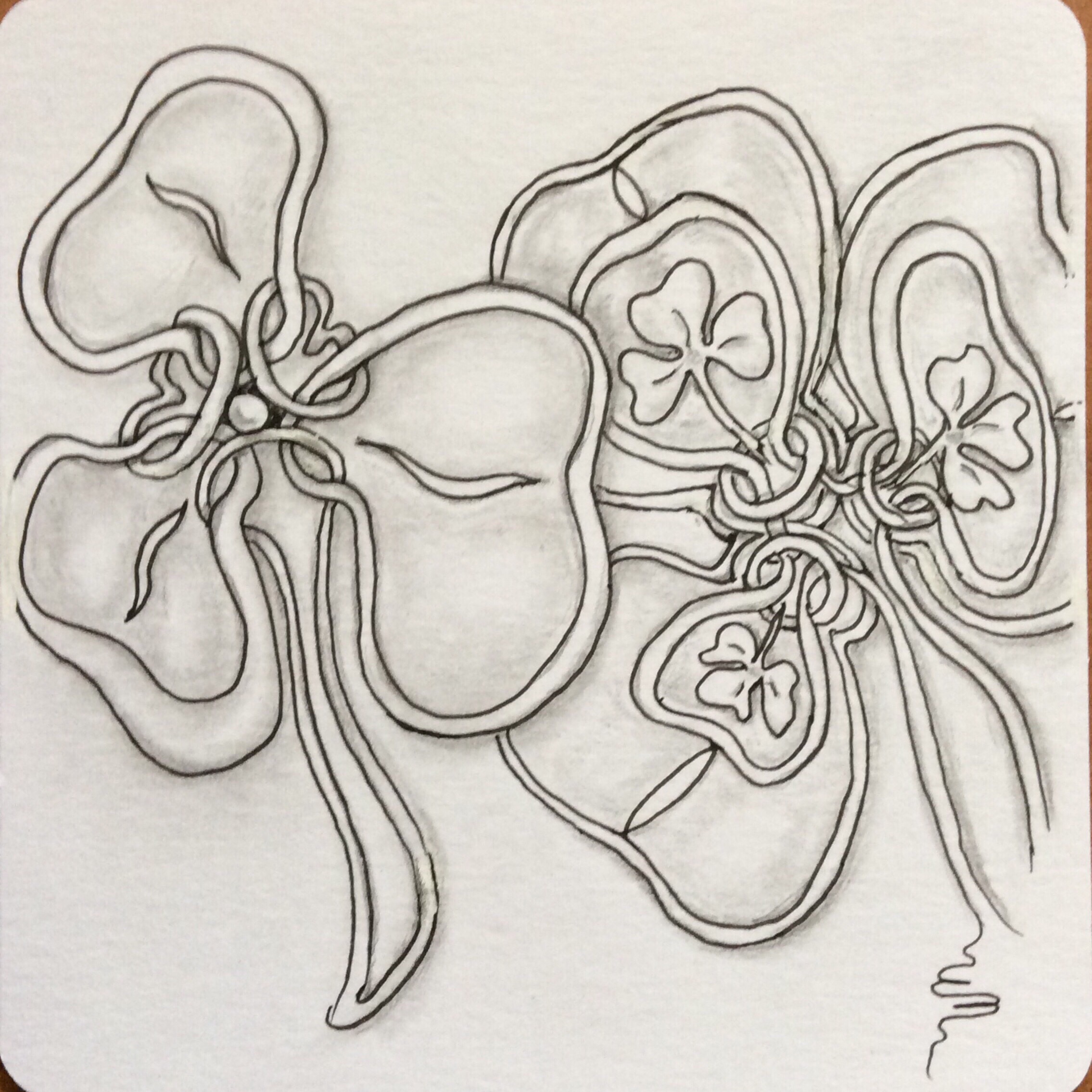
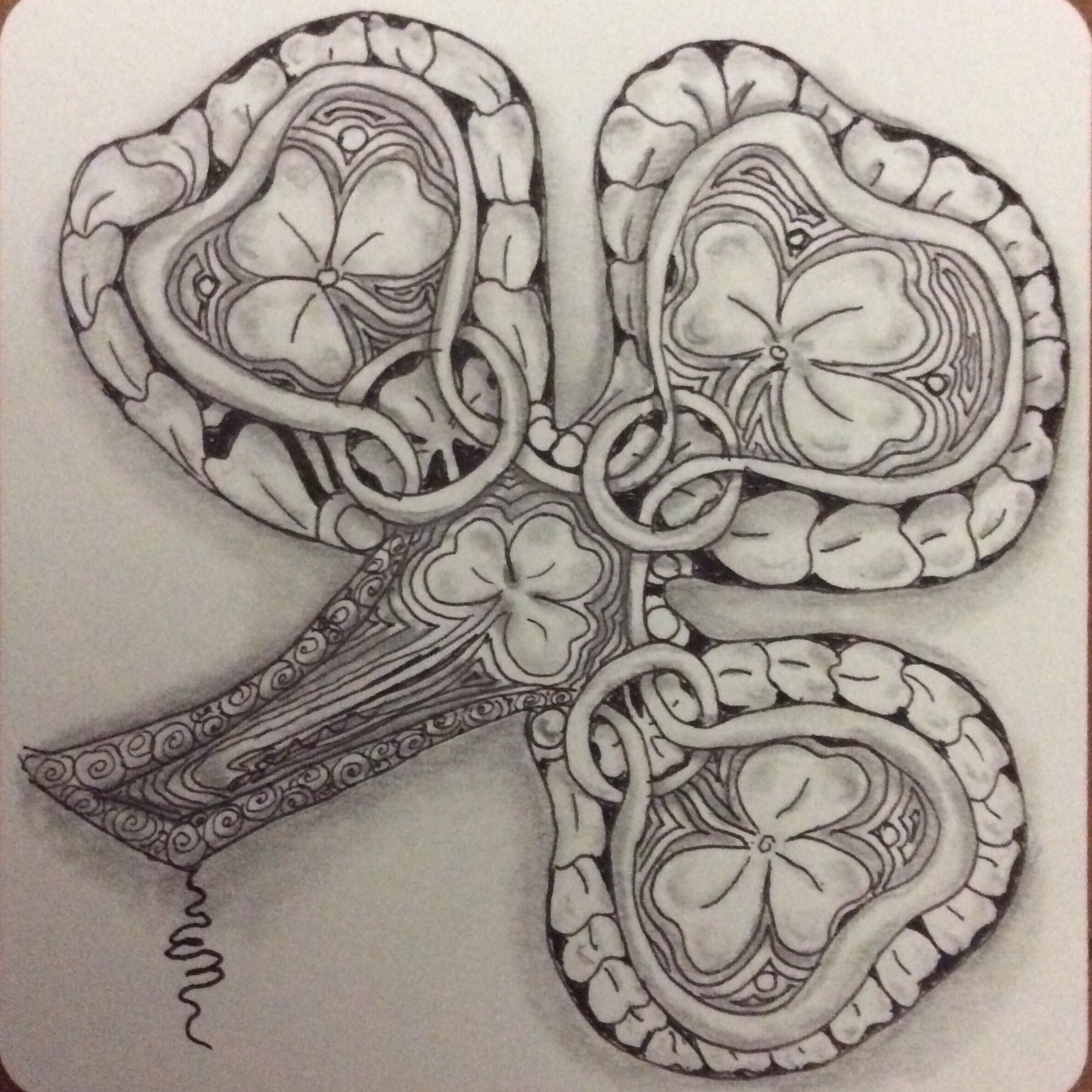
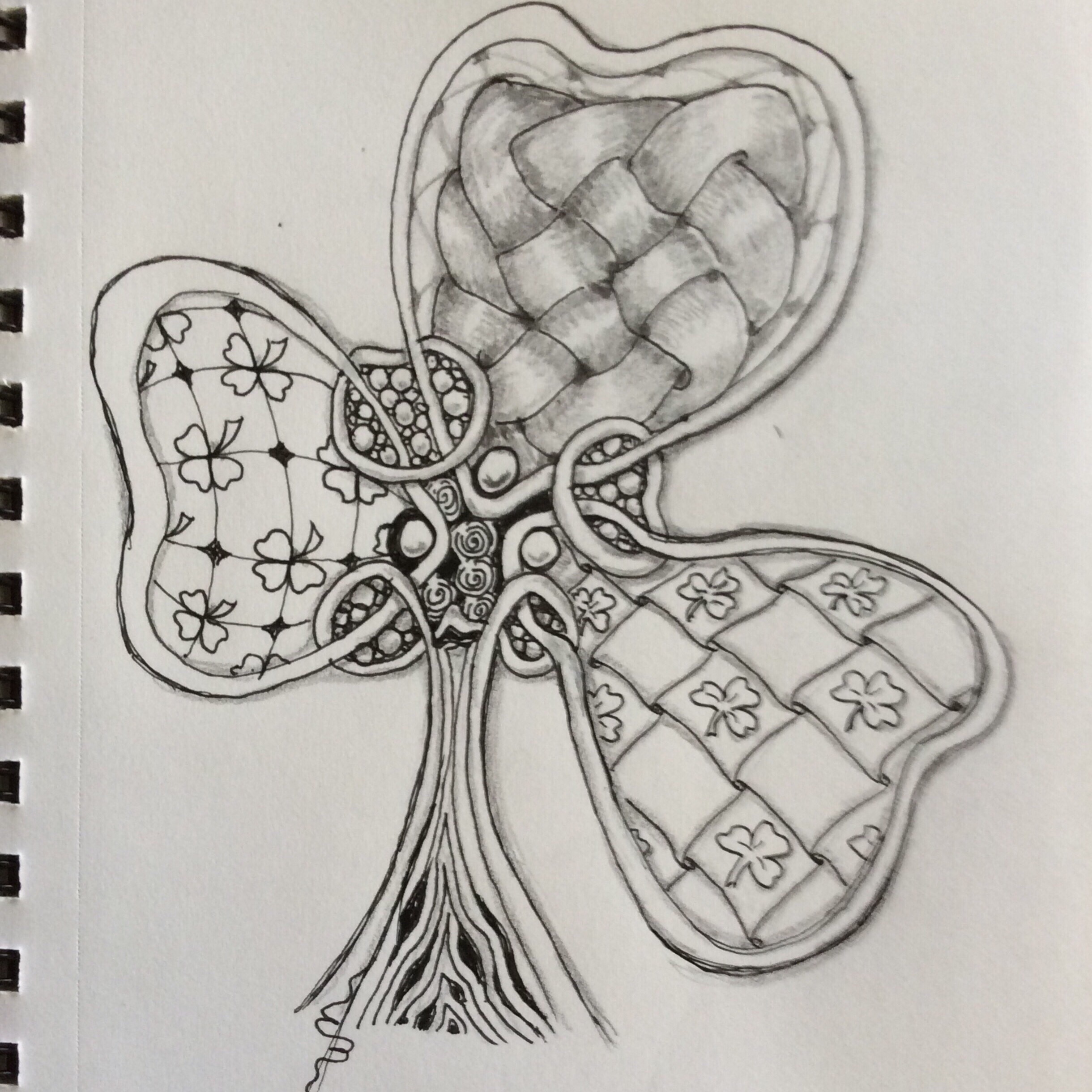
A St. Patrick’s Day Shamrock Way Bop tile.

Nothing fancy or exciting, I know. It was the idea that was being used, although maybe the shamrock doing a jig got someone smiling. 

I love the tangle called Way Bop, and waited somewhat impatiently for months for a step-out to come out. I tried to mimic Way Bops as drawn by artists and tanglers for the Zentangle Mosaic app and for challenges all over the Internet. I came close, but the procedure I used was convoluted and the results were far from satisfying. I was certain there was an easier way to draw Way Bop, and that I would have to wait until the step-out was released. 

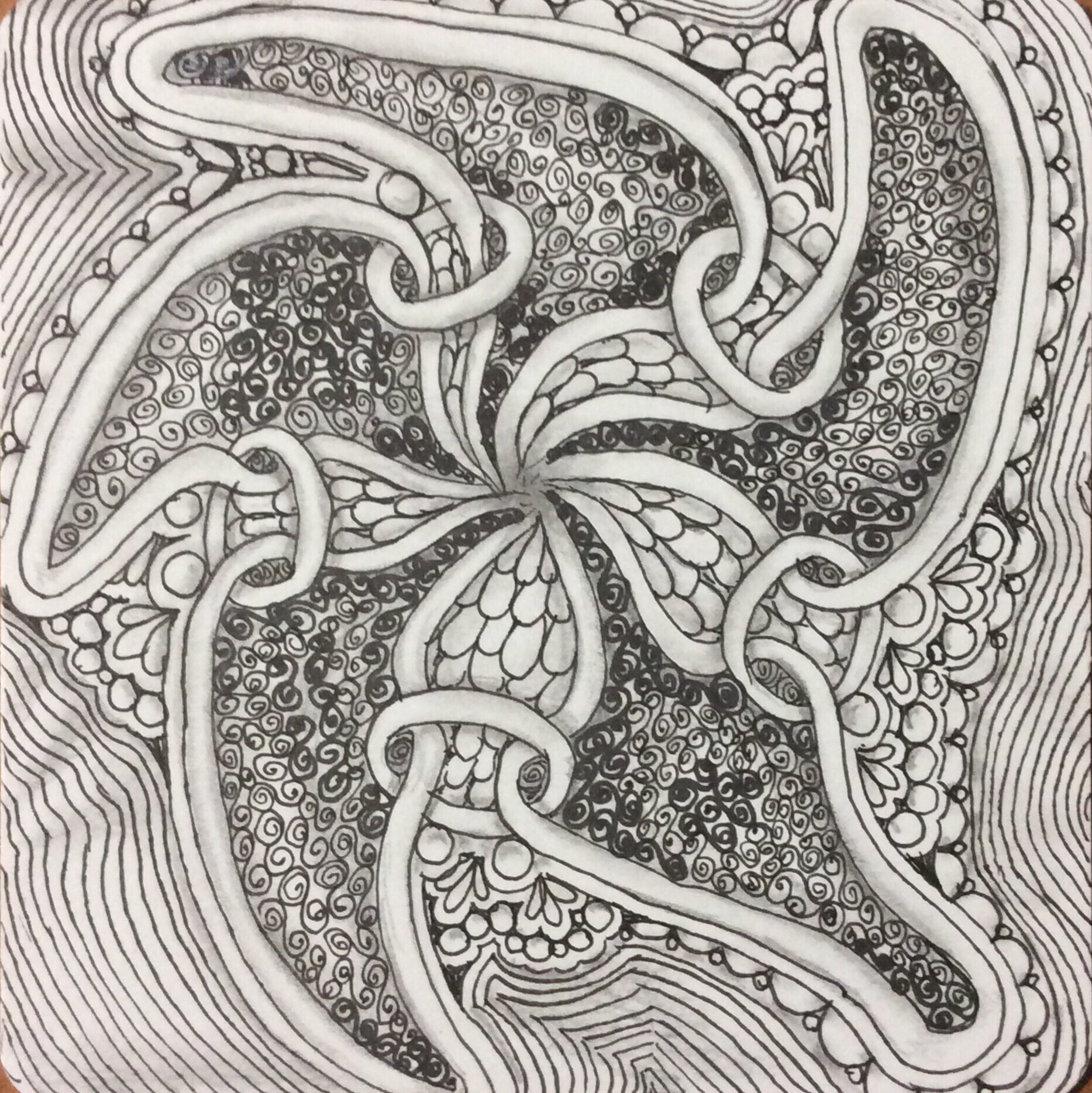
About a month ago, Zentangle released the step-out for Way Bop (link to my post with step-outs) along with another step-out of a heart-shaped variation. I must admit that I was excited beyond words. I started drawing nice, conservative Way Bops, but realized I have a long way to go before I can draw ones that look like the fancy ones appearing all over tangling blogs and in Mosaic. So I started fooling around. Here is one of my favorites, called Anger Management. 
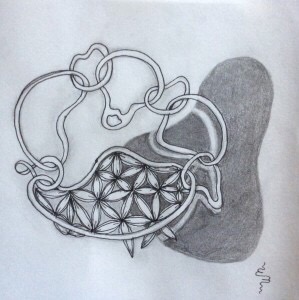
Anger Management
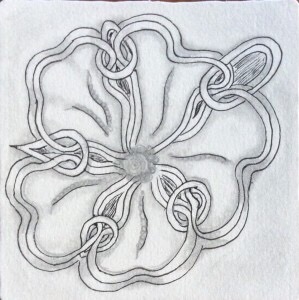
  And another that was inspired by a hibiscus outside of my patio door. 
Hibiscus — sort of

Way Bop is an amazingly versatile tangle that looks best when it is used as a structure for filling in with other tangles and “fragments.” But it is a flexible enough pattern to be morphed into all sorts of fun and modernistic shapes. 
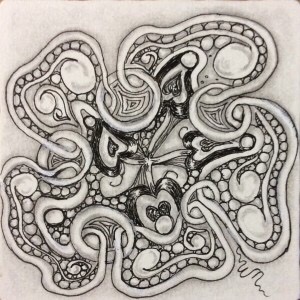
After tangling a heart-shaped Way Bop for the Valentangle 2017 challenge on Facebook, I figured other shapes could be made from the pattern, too. So last week I started fooling around with shamrock shapes. Here are some examples–nothing fancy or beautiful, but they definitely are shamrock shapes filled in with other tangles or shapes. 
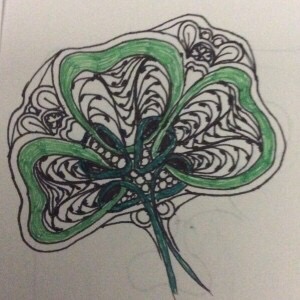

If you can’t tell, I love Way Bop! If you need the original step-out mentioned above, click on the link in the second paragraph. It takes you to the post that contains both the regular and the heart-shaped variation step-outs. 

Where can Way Bop take your tangling? Anywhere you want it to go, of course! 

Until next time, Happy Tangling! 
Posted in Zentangle

Back to Basics

For the past week or so, most of the tiles I created have been based on the earliest lessons of the Zentangle Primer, by Rick Roberts and Maria Thomas, founders of Zentangle. I was feeling overwhelmed with so many new patterns being developed, especially since I have not mastered some favorites I have come across over the past several months. When I feel overwhelmed like this, I go back to the Primer and try to work all the way through again. With each pass through the book, I am reminded of things I have forgotten, things I want to work on improving, and some important suggestions from the authors. 

Today, I tangled an exercise that made me think. The purpose of the exercise was to draw a string that creates a number of areas, and then to combine some adjacent areas for tangling with a single pattern. Although I now combine areas all the time and without thinking, I forgot how difficult this was for me to do early on. Even though I have done this exercise several times since I purchased the Primer, I suddenly found deliberately combining areas difficult to do. When I tangle with no particular objective, encroaching into an adjacent area with a single tangle simply happens without my thinking about it. When I think about doing it for a purpose–such as for this exercise–I am stymied. 

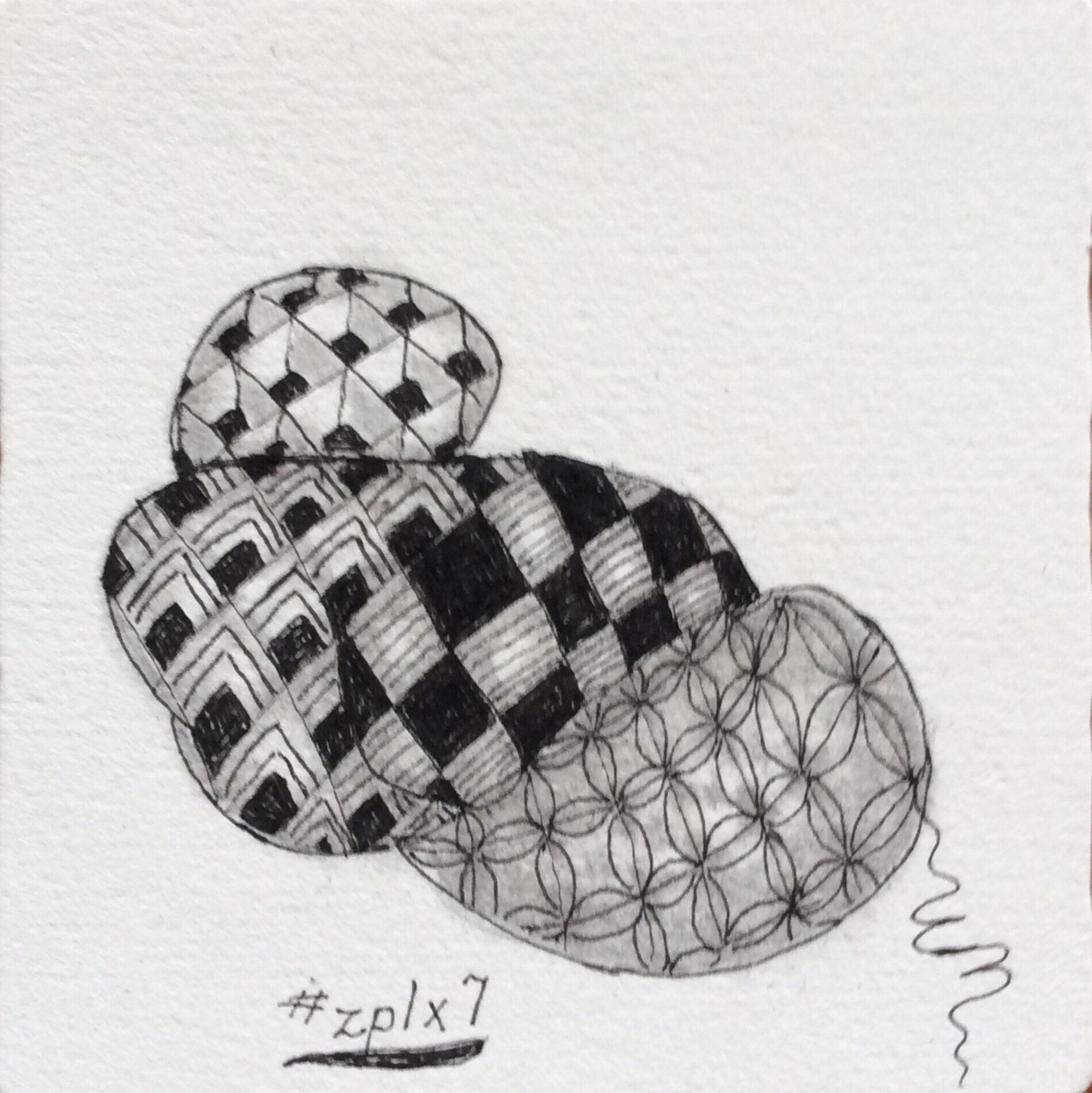
For this exercise, I used a few tangles that I learned during my first week or so of tangling, almost a year ago. Except for Florz, I don’t often use these patterns (Knights Bridge, Flukes, Cubine), in part because of the solid black areas that are part of the patterns. There are days when I have trouble staying within the limits of the dark areas because my astigmatism is particularly bad for perception. Instead of filling in areas with color, I tend to substitute fine lines that make the area darker but less dramatic than solid black.  So why I chose three patterns with defined black areas is a mystery to me, except that they seemed to go together. But that is what often happens when we tangle–it’s like the pen takes over. When decisions need to be made to fulfill a purpose, pen and mind can come into conflict, and the finished tangle can look a little brittle or forced. That is what happened with this tile, I think. Forcing the blending of two areas made me anxious, and the tension showed up as a conflict among patterns rather than a free mingling. 

That the realization of how I tangle was brought to the forefront of my thoughts during this exercise shows how flexible the Primer‘s lessons are for tanglers at all stages of tangling development. On the Zentangle Mosaic app, I have seen tanglers–especially CZTs (Certified Zentangle Teachers)–who have been tangling and teaching for years, fall back on lessons from the Primer. The versatility of the book is amazing. New tangles can be found all over the Internet and in books and e-books. But the basics of tangling–the method, process, and purposes–are rarely found outside of the Primer

For me, the Primer has become an essential part of my tangling–from providing inspiration when I feel stuck, to reminding me about sticking points for my early tangling attempts and current needs. Right now, it is helping me get back to basics so I can get over feeling overwhelmed by a deluge of new patterns. 

Next, I will try this exercise again using new patterns I have learned recently. There is always a new way to interpret an old lesson!

Until next time, Happy Tangling! 
Posted in Zentangle

Totally Tangled…

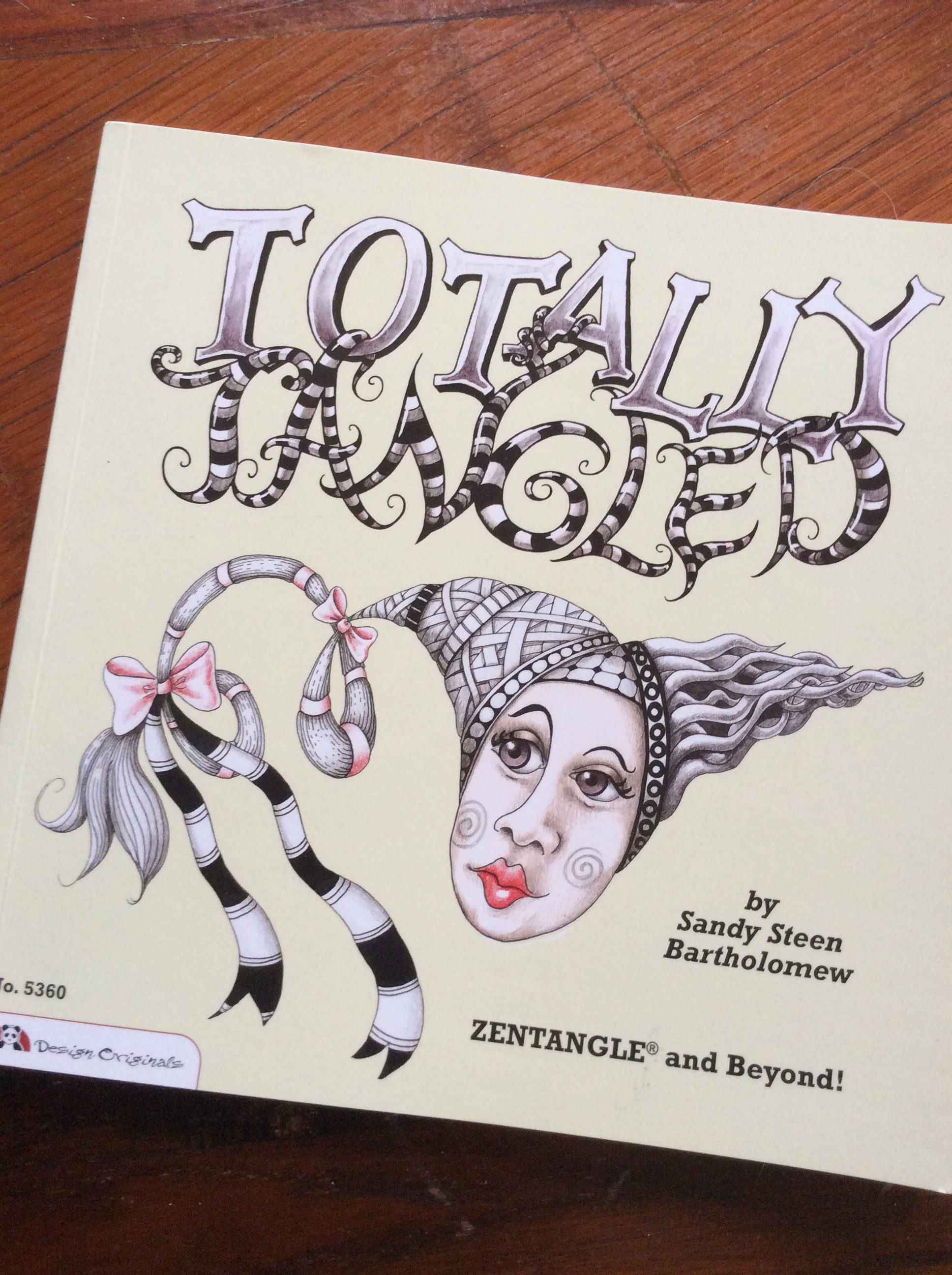
Not long ago, I talked a little about getting started with Zentangle. I had just received Yoga for Your Brain, by Sandy Steen Bartholomew and was all excited about the ideas and presentation. As always, I recommended the Zentangle Primer by Rick Roberts and Maria Thomas, Zentangle founders (available from Zentangle.com for $49.95) as the first book to get. Because it is an investment, I suggested One Zentangle a Day by BeckAh Krahula (available from Amazon.com in paperback for $13.79, or Kindle version for $12.99) as the second best option. I was waiting to receive Sandy Bartholomew’s first book on tangling, Totally Tangled, to see if it was an equal to Ms. Krahula’s book, or maybe even better. Based on the Yoga book, I was expecting a sensational introduction to Zentangle in Totally Tangled

Totally Tangled finally arrived in our mail late last week. 

Totally Tangled is a great book, filled with a lot of patterns and advice about creating tangled art. At less than $12 on Amazon, it is a great value for the ideas alone. But… Although it introduced the Zentangle Method®, there was little in the way of follow-through in terms of the ceremony or process of Zentangle. It deals very briefly with the relaxation and meditation aspects of Zentangle. The textual content tends to be an overly frugal summarization of the Zentangle Method, philosophy, and process. However, the photographs and drawings are sensational, especially to those who have absorbed much of the whole Zentangle process. 

Totally Tangled came out before Yoga for Your Brain. It contains a lot of information about drawing and creating patterns, enhancing scrapbooks, repurposing old ceramics and “outgrown” household goods. It even offers some great ideas for involving children in drawing with tangle patterns. Yoga for Your Brain picks up and expands on these ideas and adds a bit more information, lots more new patterns, and several new and different project ideas. Neither volume, separately or together, comes close to the wealth of information and ideas presented in either the Zentangle Primer or One Zentangle a Day. As I stated in the previous post, if the purpose is relaxation and meditation but money is a main consideration for initial outlay,  One Zentangle a Day is a great value. It costs about $2 more than either of the two Bartholomew books, and contains more information on techniques, art enhancements, and the relaxation/meditation aspects than the two Bartholomew combined. 

In short, my feeling is that Totally Tangled is excellent if the primary purpose to its purchase is as an idea and inspiration book. I would recommend it as a great supplement to either the Zentangle Primer or to One Zentangle a Day, but I would not recommend it as a “first Zentangle book,” unless the reader’s main purpose for purchasing it is to freshen art or add to one’s repertoire of arts and crafts projects. 

That being said, all these books contain lots of patterns and art ideas, with the Bartholomew books topping the other two in sheer volume of imagery.  The artwork alone makes both Totally Tangled and Yoga for Your Brain a great investment for supplementary ideas and art inspiration, whether the art is Zentangle or more traditional art forms or crafts. 

Posted in Zentangle

Drawing Bigger

Today I started making a conscious effort to draw bigger. 

One of the many pieces of advice found in the book Zentangle Primer is to draw patterns large. When certain patterns are drawn large, other patterns can be drawn inside. Patterns that are larger also require more control and focus, and fill up a tile faster. A single pattern drawn very large can serve as the tile’s string.

When I get caught up in tangling, I tend to draw my patterns small. Consequently, my tiles turn out darker than I like. Sometimes, they take on a cluttered appearance. Too often, my tiles take a very long time to draw, sometimes making the mediation almost tedious, detracting from the intended relaxation. Thankfully, tedium rarely happens. 

This morning, I tangled larger than usual for most of the piece. It went faster and resulted in an airier-looking tangle. 

The border was added last and  was drawn along the outside of the original boundaries, without “straightening out,” to give the piece a more spontaneous feel. 

Although I need to tangle still larger, this is a step in the right direction. The 8-step Zentangle meditation took far less time than my usual tiles (20 minutes compared with my average hour or so), and, surprisingly, left me feeling more refreshed. 

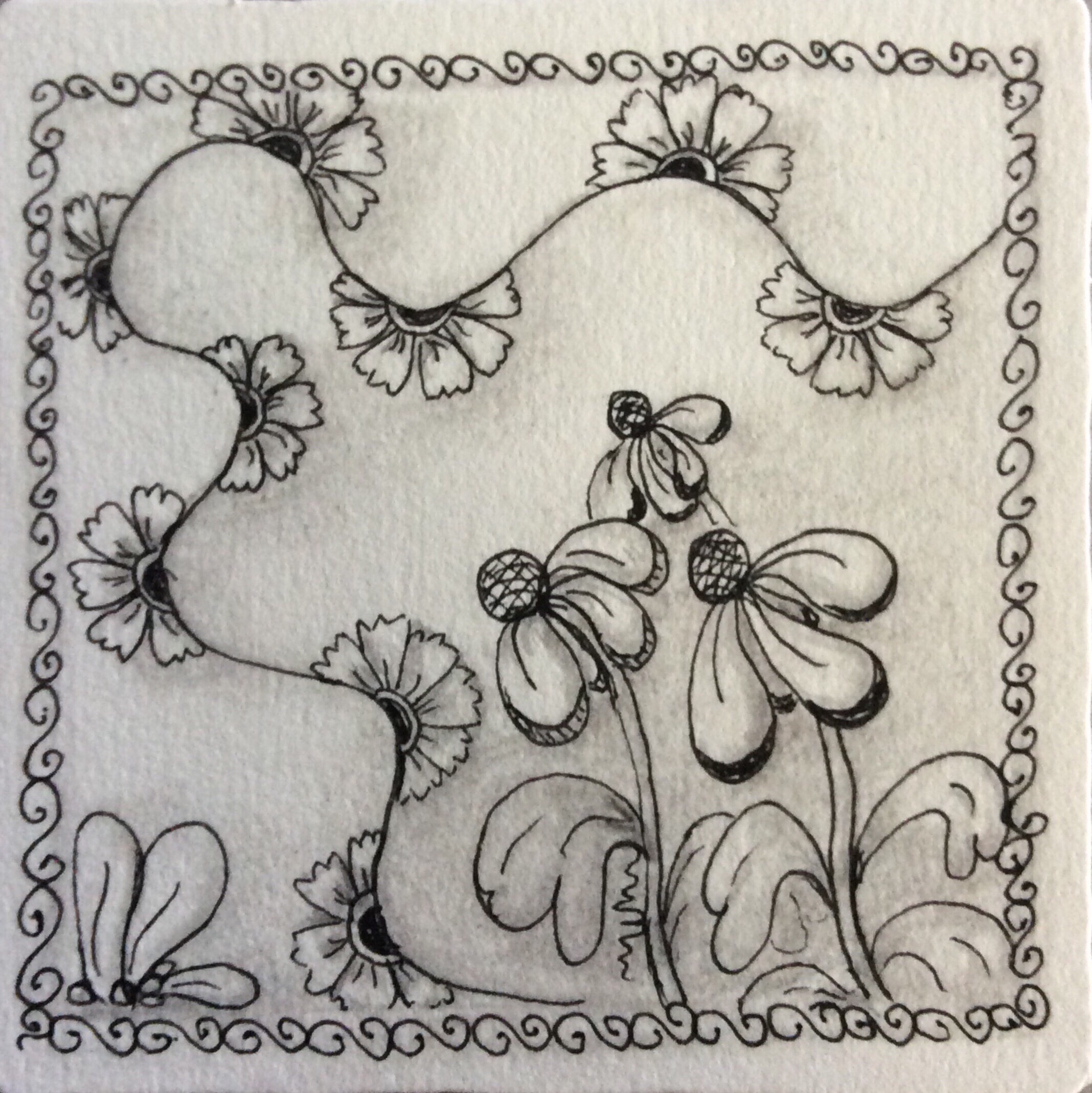
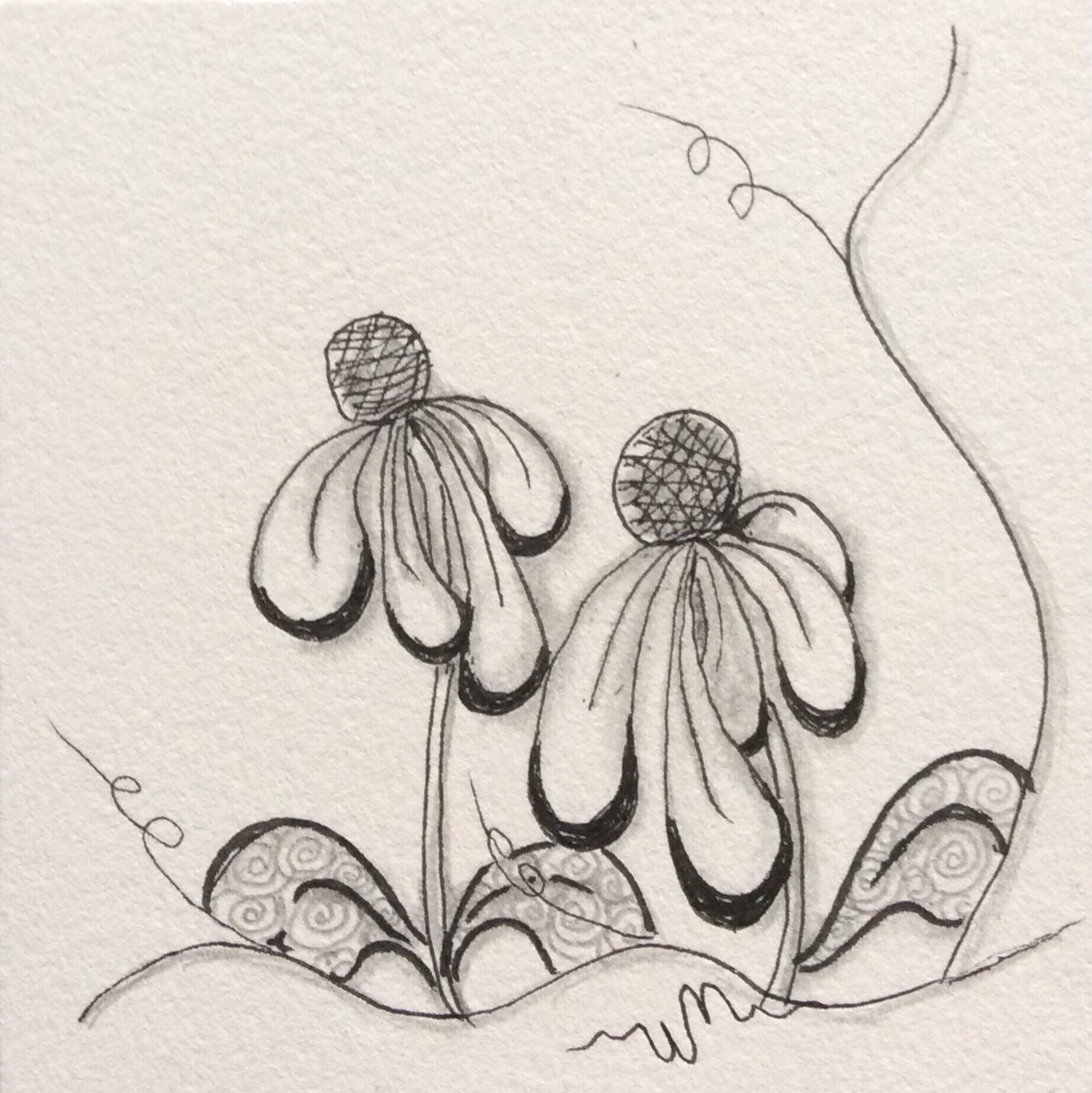
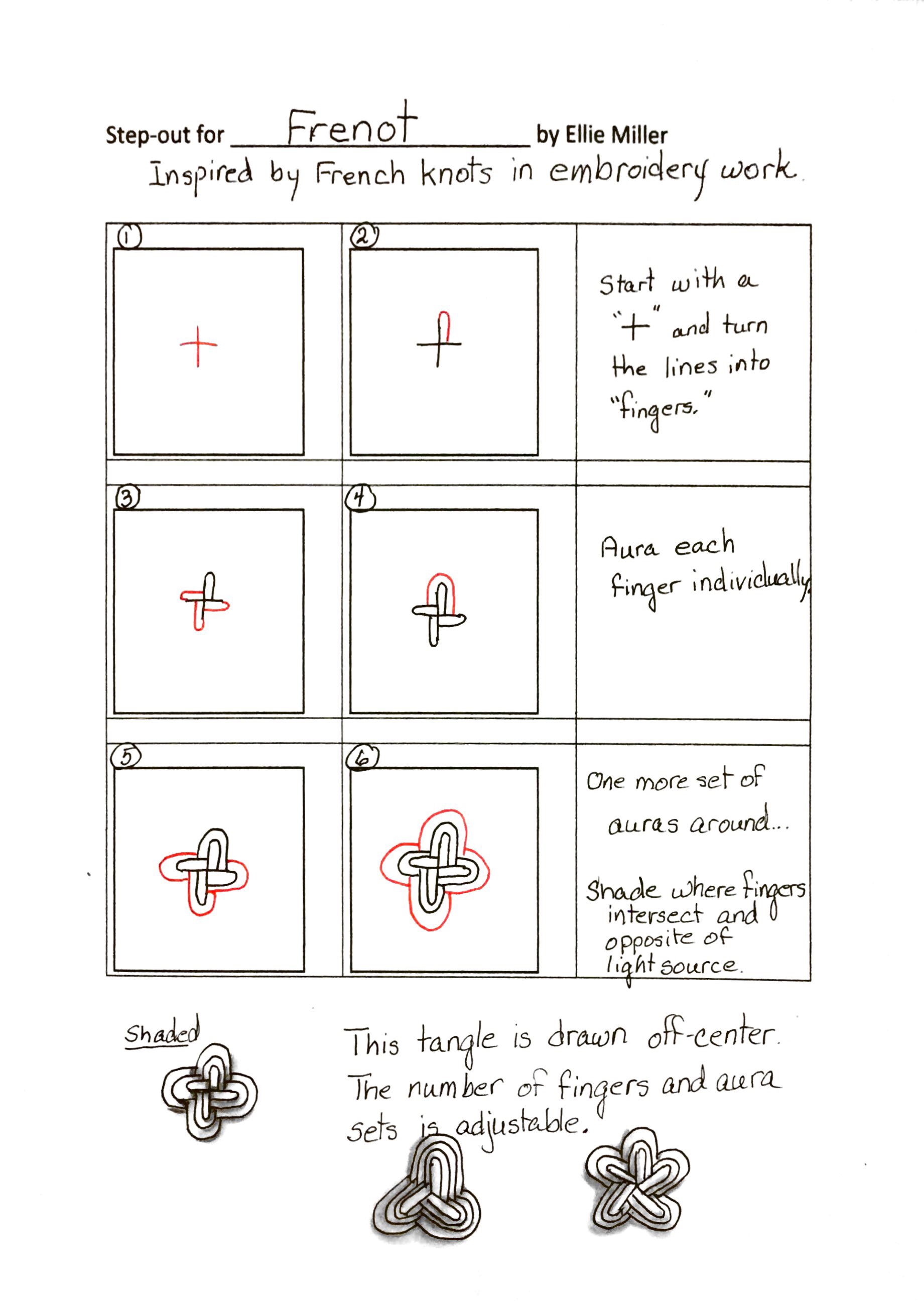
Patterns used in this tile are Henna Drum (the bachelors button looking half-round) and Flee (the cone-flower-like pattern in the bottom right area). Along the outside of the original pencil border, I added a chain of Scoodle elements.

The pattern Flee, drawn even bigger, allows enough space within the pattern to fill leaves and petals with additional tangles. Here, although I left the petals alone, I filled the leaves with the Printemps pattern to give them texture. The Printemps was drawn with the 2B graphite drawing pencil recommended for shading. The leaves were drawn with the Micron 05 pen, which creates a line about twice as thick as the Micron 01 pen. The texture would be richer drawn with the Micron 01, or somewhere in between if I had used a Micron 005 instead of graphite. The same or different pattern (or several patterns) could have been used to fill in the petals for a totally different effect. 
In the last tile, the pattern Flee serves as the string for tangling other patterns in the spaces created by petals and leaves. 
Drawing a pattern very big on your tile can give you a lot more options, especially if inspiration is not coming. Each drawing size yields different possibilities. Those possibilities are endless! 

Tangle, relax, set imagination free, explore your creativity!

Happy tangling!

Posted in Zentangle

New Tangle: Frenot

This new tangle is one I have been using for several months, calling it Frenot. I haven’t posted a step-out before, mostly because I was not sure it is unique. Now, I am pretty certain it is something new.

Frenot  was inspired by the French knot in embroidery work. While unpacking from our move last year, I came across a tiny piece I started years and years ago but never finished. One stitch that was used in it was the French knot. There was a cluster of French knots, creating a ring of petals or blooms. It inspired me to create a tangled interpretation. Being completely new to Zentangle, I didn’t know that anyone can create and name a tangle. Although I used it in some of my tiles, I was afraid to share those tiles because they contained an “unknown” pattern.  It took a while to realize that 1) anyone can create a new pattern; and 2) it is unique, as far as I can tell. 

Although I have been tangling for more than ten months now, I have been working pretty much on my own. That’s why I continue to call myself a newbie or beginner. I have learned so much! There is still so much to learn! Recently, however, I have had a lot of Zentangle-related help from several lovely people on the Zentangle Mosaic app (iPhone/iPad and Android formats available). No one has been more of a help and inspiration to me than Jody Genovese, CZT. It is thanks in large part to Jody’s encouragement on my tangling explorations and experiments that I have gained confidence–in my ability to tangle, and in my willingness to share. So I dedicate this new pattern to her. 

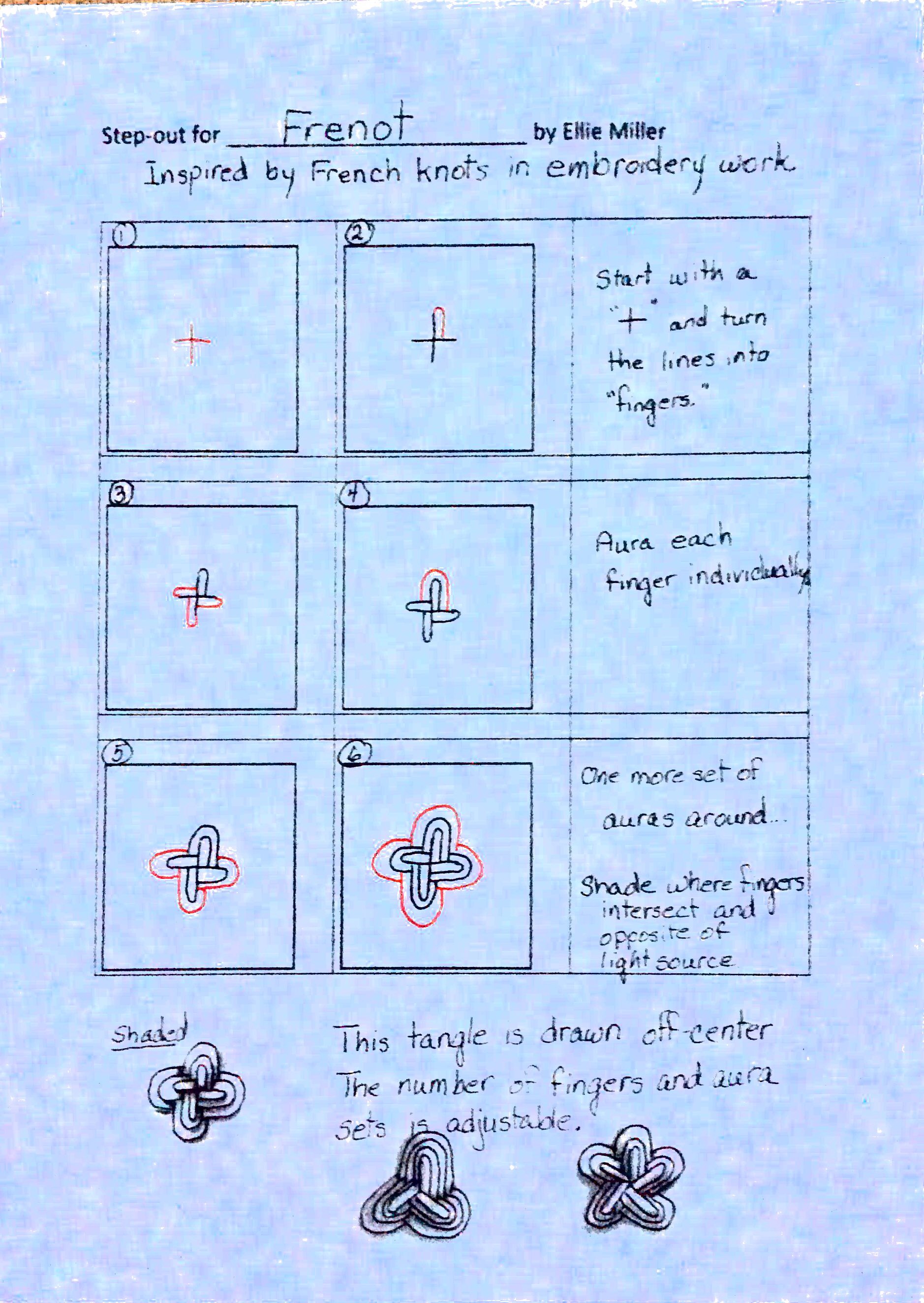
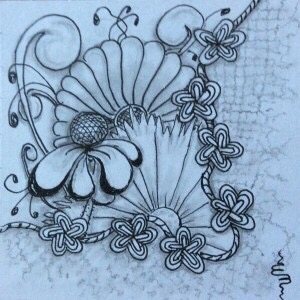
Here is the step-out for Frenot.

Step-out for new tangle pattern Frenot

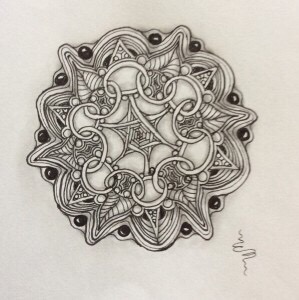
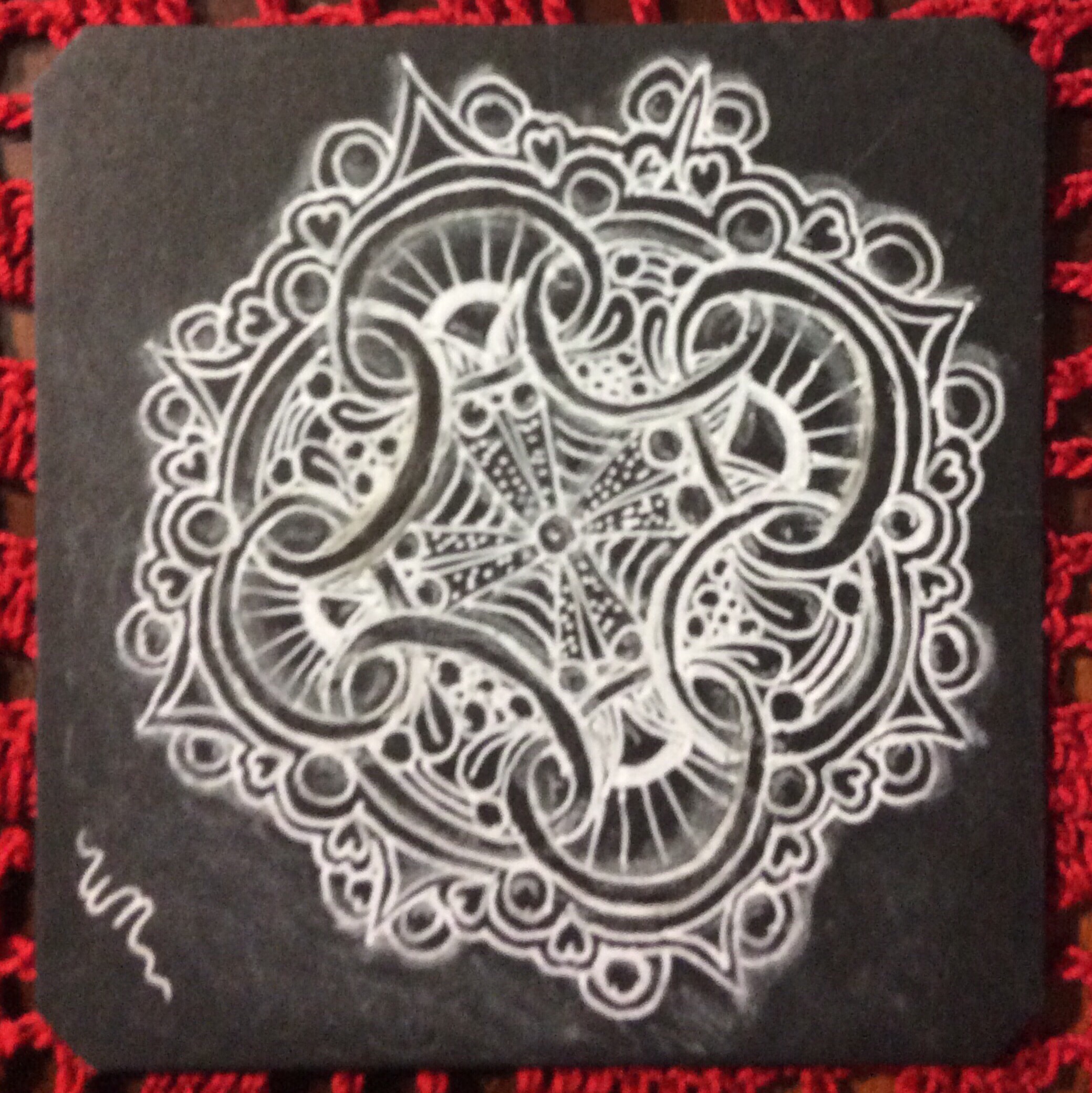
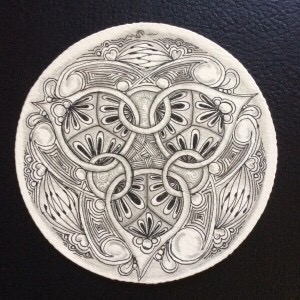
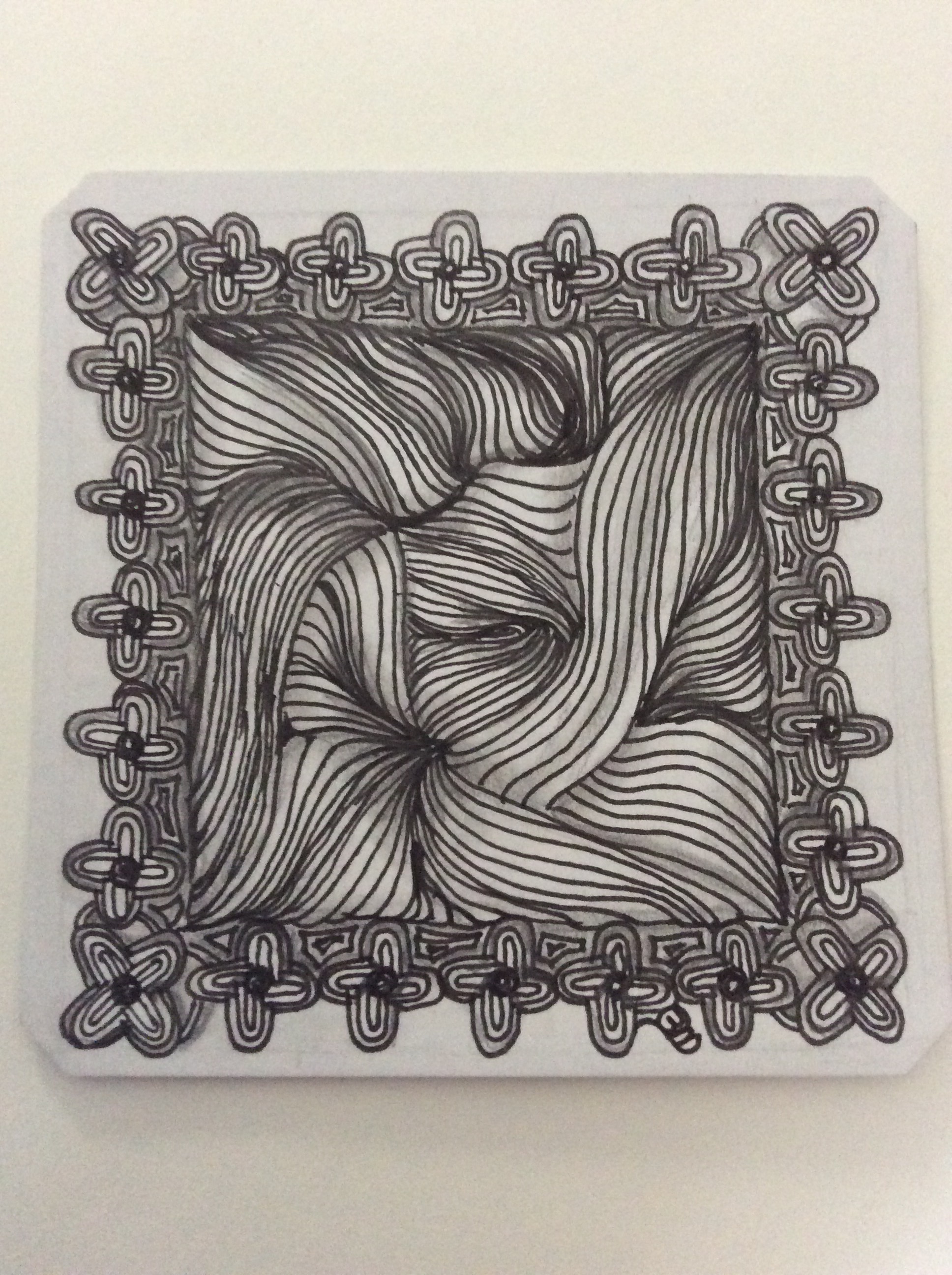
Here are a few tiles on which I used Frenot. Two of them I shared on Mosaic. 


If you like Frenot and use it in a tile or other work, please feel free to include a photo or a link in the comments section. I would love to see how you use it! 

Until next time,

Happy Tangling!
Posted in Zentangle

Inspired to Create

Inspired by Yoga for Your Brain (see earlier post, InTheMail), I created a new tangle. I don’t have a picture of the photo that inspired me, but I found it while looking through a magazine in the doctor’s waiting room. The article and photos dealt with an architectural dig in Central America. I was surprised to find a tangle pattern among the ancient artifacts!

It was two days before I recorded what I saw as a potential Zentangle pattern. To my eye, it functions best as a grid or border tangle.

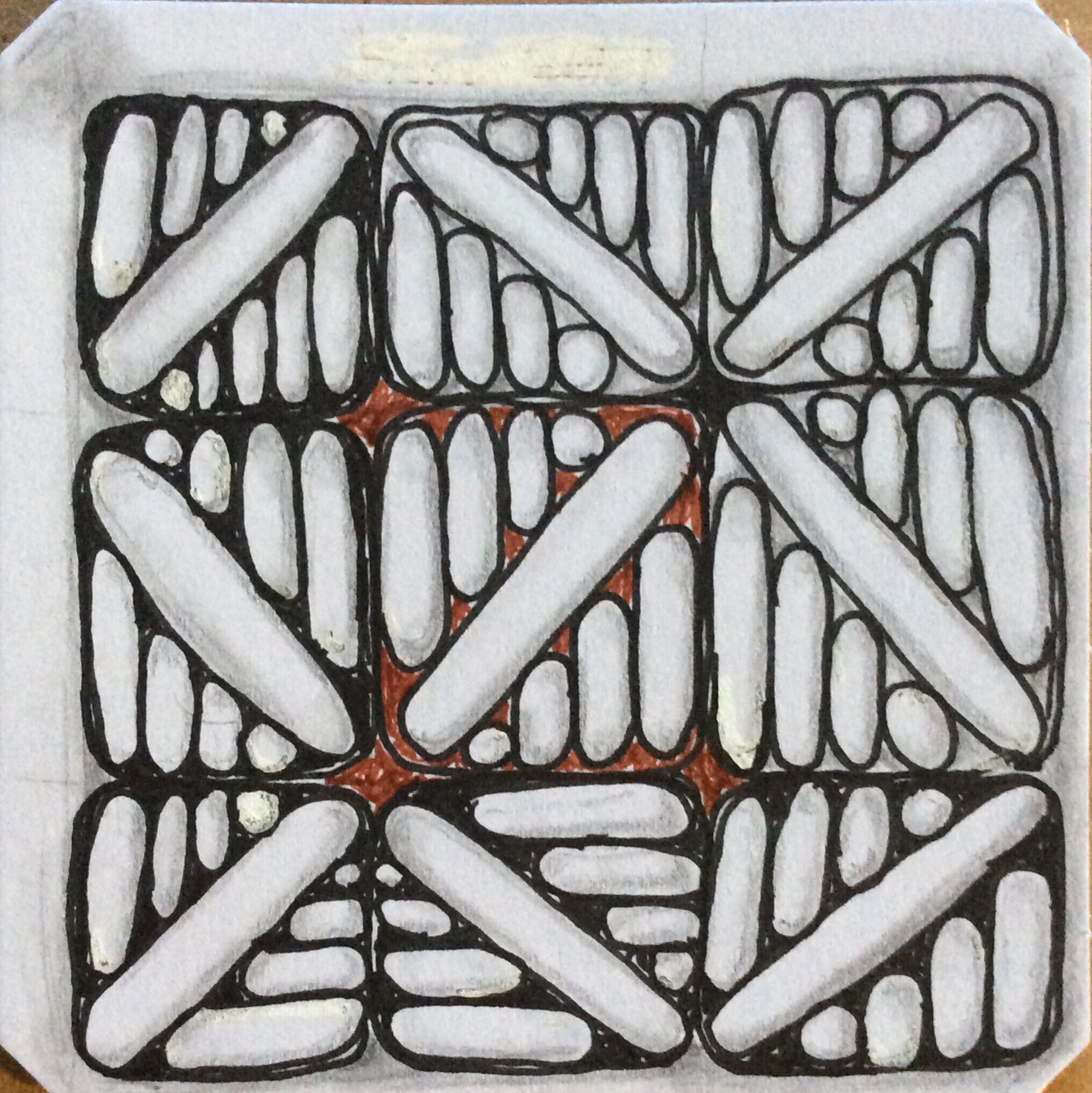
My new pattern, Stonework.

 This picture shows a hurriedly drawn grid with a few minor differences in the basic pattern–shading, rounding, rotation. I think it might also work well as a background pattern, but we’ll see what I come up with. 

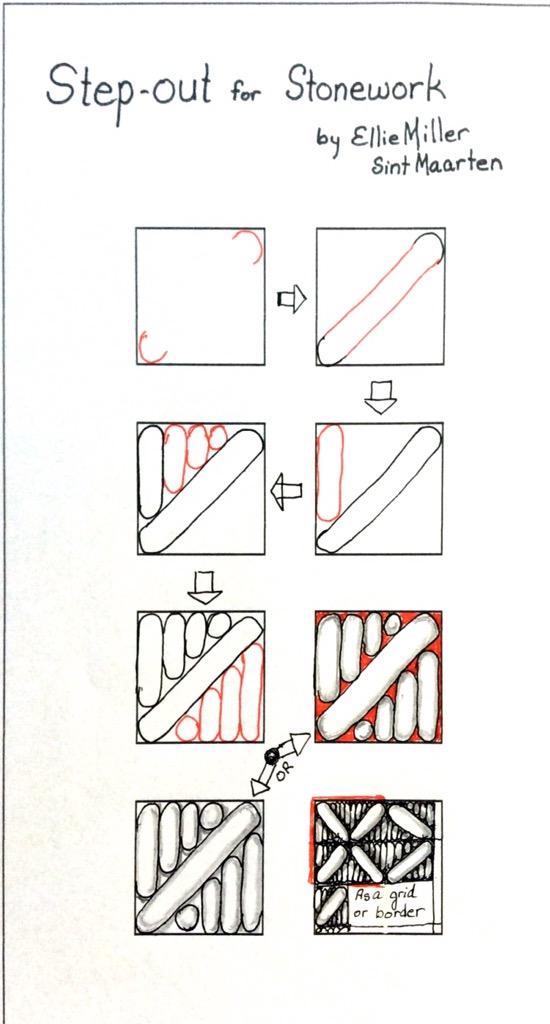
If you want to try it, here is the step-out. Stonework step-out

For me, I start diagonal ovals and rounded strokes with rounding off the corners. Part of the reason is that my astigmatism causes distortion of lines for me. It is easier to connect two points than to try to figure out where to start curving–I am almost always wrong when I try to guesstimate. In drawing the smaller oblongs, I start with the longest, basically doing the same thing as for the diagonal with the rounded ends. The rest of the row is just elongated C’s, followed by a circle. Finally, I either round (fill in) around the ends or shade. 

When the pattern is used in a grid with rotated diagonals, the effect can be flower-like. As a border, the patterns can all go in the same direction, or the direction can be rotated. In corners, the pattern can be “mitered,” especially if the horizontals and verticals are drawn in different rotations. 

Before creating the step-out and naming the pattern, I checked through all the patterns in TanglePatterns.com’s latest e-book catalog (2017) called Presenting … The Tangles. To the best of my ability to discriminate, this tangle is unique. Two or three patterns might be roughly similar, but none share more than one characteristic with Stonework. One pattern has stacked oblongs, but they are all the same size. Another pattern has a diagonal oblong, but no vertical or horizontal ones. That’s as close as other patterns came to this one. 

Please let me know if Stonework is the same as another pattern. Zentangle is an international community, and not all countries share tangles. I have seen tangles on various web sites online that are identical but share several different names. At the very least, I would like to share the names of the patterns for cross-reference. 

If you use this pattern, please leave a comment and a picture or link to where it is posted. Thanks!

Happy Tangling! 

Posted in Zentangle

Diva Challenge 304

It’s the last day to submit to the Diva Challenge #304. The tangle is Way Bop. So many tanglers contribute beautiful serious works that are rich in textures, patterns, and movement. I decided to submit my fun and fanciful Carnival Dancer 💃 because this tangle was so much fun to do. I had been experimenting with contrast for shading, which didn’t quite work out the way I had thought it would. That the dancer emerged was a bonus to my fun, though.

img_0557

Posted in Zentangle

Endorphins on My Mind

Zentangle is in large part a mindful method of stress reduction. When one tangles, a meditative calm sets in, often releasing unexpected bubbles of creativity that positively excite us into a focused frame of mind as we concentrate on what the pen is drawing. Sometimes we plan our tangling; sometimes the pen seems to take over and the only things left to our minds is to focus on steady strokes, straight lines, and smooth curves. As we are doing all this, the brain and body release endorphins, and we feel better and better. 

Endorphins are those feel-good hormones produced by our bodies’ brains and nervous systems to inhibit pain and produce a euphoric state (probably to reduce pain!). They have a calming effect on our nerves. They want to soothe whether the pain is physical or emotional. They also make us want to reach the same levels of feel-goodedness again and again and again. In short, they are addictive.

When we are stressed or under psychological pressure, we tend to tighten up, which causes muscles to ache and heads to throb. Whether we think about it not, we need for our systems to release a few endorphins to make the pain and stress go away. If we don’t take proactive measures to reduce the effects of stress, everything gets worse–muscles knot up more, the throbbing in our heads takes on the sensation of being pounded by a psychopathic drummer, aches increase, and so on in a downward cycle. 

Because we often can’t think straight when we reach the point of physical discomfort, the best proactive approach is to practice endorphin-releasing activities to either lessen the effects of stress or to keep stressful situations from taking us to a point of no return. Some people run every day or two; other people work out at the gym; still others take yoga classes. Some of us Zentangle.

Zentangle can be practiced anywhere–in the grocery checkout line, in the doctor’s waiting room, in a restaurant waiting for an order, in front of the TV, in bed–well, anywhere at all. Even if people use smart phones to record appointments and lists, a pencil, pen, and small note pad or artist tile are easy to always slip into a pocket or purse, or keep on the nightstand. Zentangle requires no special clothes or equipment. A smal amount of time–maybe 15 minutes–is all that’s needed, and no appointments or schedules are required. 

If the paper or tile gets a little smudged or wrinkled as it travels along with you during the day, those elements just add charm and character to the tangle. Here’s a tile I drew while waiting in the car for my husband’s haircut to be finished. 

Creases from cell phone pushed on top in my purse were accented with graphite. A scribble from a lost pen cap was incorporated into the design–sort of.

Nothing fancy, and I admit I shaded it at home because he came out faster than I expected–but still not a bad little piece of on-the-go tangling. It was a little cramped behind the wheel, as I am very short, but I had enough elbow room to draw and relax a bit ( and I could have moved the seat back). My husband always calls for pick-up too early. Rather than be angry, I tangle while I wait and let the endorphins flow. And if I am not finished when I reach the cashier or my breakfast order arrives (or my husband gets in the car) I can set the tile aside to complete it another time. I don’t need to worry about forgetting what the next step was supposed to be because Zentangles are unplanned. The patterns should be those that come to me when the pen reaches a blank space. When that space is reached–in the next microsecond, a year, or any time in between–the pattern that comes to mind is the one that goes there. It’s OK to plan the patterns; it’s just not necessary.

An idea just came to mind. It is time, I think, to tangle another tile and get another endorphin fix.

Until next time, Happy Tangling! 
Posted in Art, Zentangle

A Sleepless Night

The night before last, I got no sleep. Zero minutes of sleep. None. 

Although insomnia hits me often–averaging every second night–I usually get at least two hours of sleep in. I know this because my Fitbit tells me so. But that night, nothing was allowing me to fall asleep.

Why am I telling you this? Because something interesting occurred and was “recorded” by my Fitbit: for the hour or so of tangling to help me relax, the app decided that all it’s measurements showed I had slept for 49 consecutive minutes! 


No, I wasn’t actually sleeping during that time. I was tangling, and was apparently deep enough into a relaxed, meditative state that Fitbit believed I was asleep. Since I have my sleep measures set to “sensitive,” the device doesn’t count any periods of movement of any kind as sleep time. It calls it restless time, possibly because the app has no way of knowing if I am simply in a less deep state of sleep or if I am in a waking-up state. So it does not count those periods as sleep. Since it is hard to draw without moving, all my other body signs must have fooled the app into thinking I was in an actual sleep state. 

Even though I already experience the restful nature of Zentangle, it was both surprising and welcoming to have the meditation state and time confirmed by a scientific device. Just another reason to tangle on! 

Posted in Zentangle

My Way Bop Examples

Yesterday I posted the official public step-out for the Zentangle® called Way Bop. I included a few of my first attempts. Today I am posting photos of two more I tangled today

The first one is drawn on a black square tile, using a white Gelly Rollâ„¢ pen for the design and General’s Charcoal Whiteâ„¢ pencil for shading. 
The second tile is a “pre-strung” Zendala® tile. That means it comes with strings already on the tile. The string breaks the tile up into smaller drawing/coloring areas. For the basic structure of the Way Bop, I “jumped the fence” (ignored the lines) a lot. Then I jumped a lot more fences to fill in with other Zentangle designs. 

Imagine what you can do! 

Remember: Anything is possible one stroke at a time! ®